Rigger push-pull sticks let crews guide, position and steady suspended loads and cargo without placing their hands on the load itself. The extended reach keeps the operator back from the load path, reducing exposure to crush and pinch points during lifts and cargo handling. They suit rigging, materials handling and logistics work where loads need controlled positioning at a safe distance.
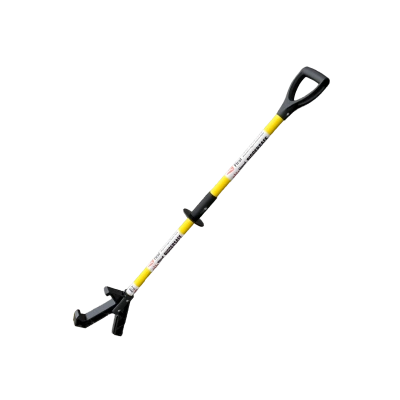
Our rigger push-pull stick range gives riggers, doggers and materials handling crews a way to control a load without reaching into it. The stick is used to push, pull, steady or rotate a suspended or moving load from a distance, which keeps the operator's hands, arms and upper body out of the immediate load path. This addresses one of the more common injury mechanisms in rigging and cargo work, where hands are placed on or near a load that then shifts unexpectedly. The tool is most useful during the final stages of a lift. Landing a load, aligning it over a set-down point, turning it to the right orientation or nudging it clear of an obstruction all call for small corrections at close range, and these are the moments when crews are most likely to reach in by hand. A push-pull stick lets the operator make those adjustments from outside the pinch and crush zone. It also works well in confined spaces such as container interiors, truck trays and congested laydown areas where there is little room to stand clear while still reaching the load. Push-pull sticks are often used alongside tag lines, though the two work differently. A tag line controls swing and rotation from a distance using rope, while a push-pull stick gives direct, immediate control over the load. When selecting a push-pull stick, consider the reach needed for the typical lift, the size and shape of the loads being handled, the working environment and how the tool will be stored between uses. Used as part of a broader dropped object and line-of-fire strategy, rigger push-pull sticks help crews keep control of loads while staying clear of them.
A rigger push-pull stick is used to guide, steady, rotate or reposition a suspended or moving load from a distance. It gives the operator control over the load without them needing to put hands on it.
Placing hands directly on a suspended load exposes them to crush and pinch injuries if the load shifts or swings. The reach of a push-pull stick keeps the operator’s hands and body outside that zone while still allowing precise control.
A tag line uses rope to control swing and rotation from a distance, while a push-pull stick gives direct contact control over the load. Many crews use both, with the stick coming into its own during close-quarters positioning and landing.
They are used in rigging and crane operations, cargo and container handling, warehousing, mine site maintenance and any work where loads need positioning by hand at close range.
Riggers, doggers, crane crews, stevedores and materials handling operators typically use them, along with maintenance crews positioning heavy components during lifts.
Consider the reach required for your typical lifts, the size and weight of the loads being handled, the working environment and where the tool will be stored between jobs. Confirm the specifications of the individual product suit the intended application and your site’s rigging procedures.
A drop zone is the area directly beneath a raised or suspended load. A failure path is the full envelope an object or energy release could travel through if a control fails, and it is usually larger. Barricade to the failure path.
Set the boundary from the failure path. Use physical barriers rather than tape where the consequence of entry is serious; state the hazard and entry condition on signage; control the entry point, and re-walk the boundary as work changes.
No. A push-pull stick guides and steadies a load that is already supported by the crane or lifting gear. It is not a lifting, levering or load-bearing tool and must never be used as one.
No. A push-pull stick keeps the operator’s hands off the load, but the drop zone still needs to be barricaded, and everyone else kept clear. It is one control within the lift plan, not a substitute.
Our specialised team is here to assist with custom solutions and multi-site safety rollout.