Product Categories

Tamper Proof and Tear Proof Lockout Tags

Lockout tags identify isolated equipment and warn against operating it while work is underway. The range covers tamper proof tags in packs of 50 and tear proof lockout tags in packs of 100, carrying Danger Do Not Operate and Danger Do Not Start legends. Both suit isolation work across industrial, plant and mining sites.
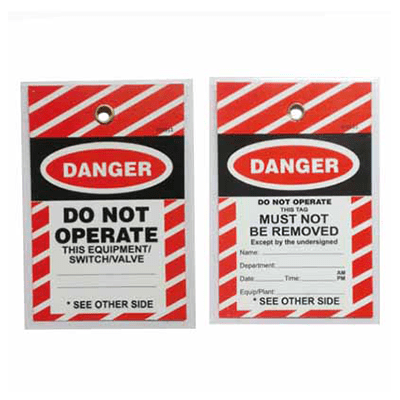
MAX-TPT

Tear Proof Lockout Tags PK/100

Price range: $46.44 through $64.80

Lockout Tags for Isolated Plant and Equipment

A lockout tag carries the information a padlock cannot. It states who applied the isolation, when, and why the equipment must not be started. At an isolation point holding several locks, the tags are what tell the next person what is happening and who to speak to. Tear proof tags use a material that resists tearing, so the tag survives weather, handling and wash down and stays legible for the length of the job. Tamper proof tags are specified where a tag needs to resist interference as well as wear, which matters on isolations left across shifts or in areas with uncontrolled access. Tear proof tags are supplied in packs of 100 and tamper proof tags in packs of 50. When ordering, match the legend to the hazard, since Danger Do Not Operate and Danger Do Not Start carry different instructions. Work out annual usage across shutdowns and routine isolations, then order pack sizes that keep the tag station stocked. Confirm the tag fields match what your isolation procedure requires workers to record.

Tear proof lockout tag in heavy PVC, printed danger do not operate with a wire tie

Tamper Proof Tags FAQs

A lockout tag identifies isolated equipment and warns against operating it while work is underway. It records who applied the isolation and why, so anyone approaching the equipment knows the status and who to ask.

Tear proof describes the material, which resists tearing and stays legible through weather and handling. Tamper proof tags are built to resist interference once fitted. Check each product for how that is achieved.

No. A padlock physically prevents operation. A tag carries the information about who isolated the equipment and why. The two work together, and a tag on its own does not hold an isolation in place.

The current range carries Danger Do Not Operate and Danger Do Not Start. Match the legend to the instruction the isolation requires, since starting and operating are different actions on some plant and equipment.

A lockout tag marks equipment isolated for work and is applied with a lock. An out of service tag marks equipment that must not be used, whether it is faulty, awaiting inspection or withdrawn from service.

Tamper proof tags are supplied in packs of 50. Tear proof lockout tags are supplied in packs of 100. Work out annual usage across shutdowns and routine isolations so the tag station does not run short.

Tamper proof tags carry a feature that tear proof tags do not, which adds cost per tag. Tear proof tags are the higher volume option for routine isolation. Many sites run both and match the tag to the risk.

Record what your isolation procedure requires. This typically includes the name of the person who applied the isolation, their contact or crew, the date and time, and the reason the equipment is isolated.

The person who applied it, once their work is finished and their lock has been removed. Taking off another person’s tag requires a documented exception process carried out by authorised personnel.

Yes. Both options are used across mining, plant and industrial isolation work. Long shutdowns, dust, heat and wash down all shorten tag life, so match the tag to how long the isolation stays in place.

Need Help to Raise the Safety Standards on Your Site?

Our specialised team is here to assist with custom solutions and multi-site safety rollout.