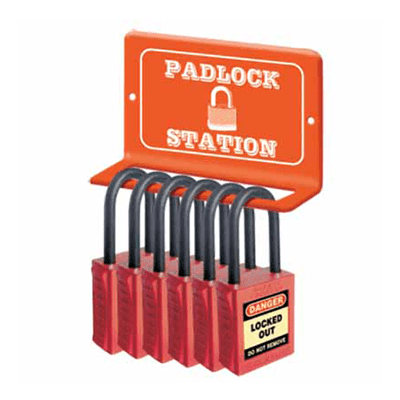
Lockout stations hold padlocks, tags and isolation devices at the point they are needed, so a crew can find and account for equipment at the start of a job. The range covers wall mounted padlock stations and double tier tag stations in a choice of capacities. Both suit workshops, plant rooms, crib rooms and shutdown laydown areas.
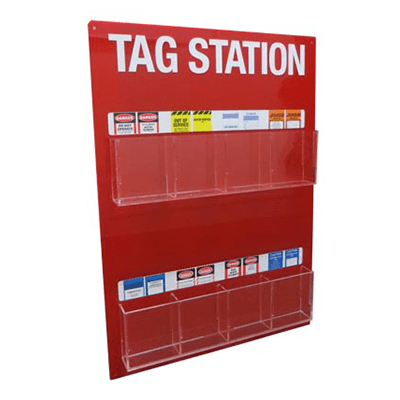
A lockout programme falls apart when nobody can find a lock. Storing padlocks, tags and devices on a wall mounted station at the work area puts the equipment where the crew needs it. An empty hook shows at a glance that a lock is still out on a job. Wall mounted padlock stations hold personal locks ready for issue, with compact units suited to small crews and larger boards covering full shift numbers. Tag stations hold danger tags, out of service tags and isolation tags, and a double tier layout gives separate space for different tag types rather than mixing them in one pocket. Both mount directly to a wall, post or plant room panel, so they sit where the work happens. When selecting a station, count the locks and tags in circulation on a typical shift and allow headroom for contractors and shutdown crews. Consider where the station mounts, how visible it needs to be from the work area, and whether the location exposes it to weather or wash down. A station sited for convenience during installation rarely suits the crew using it.
A lockout station is a wall mounted board that holds padlocks, tags and isolation devices at the work area. Keeping equipment in one visible place makes it easy to issue, return and account for at the end of a job.
A padlock station holds personal lockout padlocks ready for issue. A tag station holds danger, out of service and isolation tags. Some sites run both side by side so locks and tags are drawn from one location.
Capacity varies by model. The compact station suits small crews, and larger boards cover full shift numbers. Count the locks in circulation on a typical shift, allow headroom, then choose a size from there.
A double tier tag station carries two rows of tag holders, so different tag types stay separated rather than mixed in one pocket. That makes it faster to find the right tag and easier to spot when stock runs low.
Mount the station close to the work area or isolation point, at a height everyone can reach, and where it is visible in passing. A station placed too far from the job tends to go unused and defeats its purpose.
This varies by product. Some stations are supplied as a board only, others as a kit with padlocks and tags included. Check the individual listing so you order the contents you need rather than an empty board.
This depends on the model. A lockout station organises equipment and makes stock visible. It is not a security cabinet, so where controlled access matters that requirement needs addressing separately.
Enough that no crew has to walk away from the work area to draw a lock. Large sites typically run a station per workshop, plant room or laydown area rather than one central board for the whole operation.
A station keeps every lock and tag in one visible place, so a missing item shows immediately. Equipment scattered through toolboxes cannot be counted, and a lock nobody can find delays the start of isolation work.
Tag stations commonly hold danger tags, out of service tags, personal danger tags and isolation tags. The exact tag set is determined by the site’s isolation procedure.
Our specialised team is here to assist with custom solutions and multi-site safety rollout.