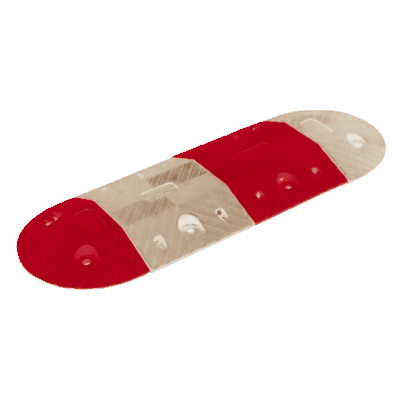
Speed humps slow traffic through car parks, driveways and internal access roads where vehicles and pedestrians share the same space. The range covers economy and premium rubber speed humps, with size options to suit the lane width and the traffic passing over it. They suit commercial car parks, industrial facilities, warehouses and mine site traffic management across Australia.
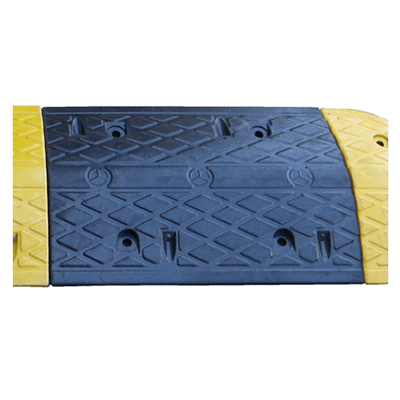
Our rubber speed hump range gives sites a simple physical control for areas where vehicles move close to people, plant or parked cars. A speed hump forces drivers to slow as they approach and pass over it, which shortens stopping distances and reduces the severity of an impact if a vehicle and a pedestrian come into contact. Unlike signage, a hump does not rely on the driver choosing to comply. Two rubber options are available. The economy rubber speed hump suits car parks, driveways and lower-traffic areas where straightforward speed control is needed. The premium rubber speed hump is built for heavier use and more demanding site conditions. The two differ in construction and price, so the right choice comes down to the weight and volume of vehicles passing over it and the working life the installation needs to reach. When specifying a speed hump, consider the vehicle types using the area, the target speed you need to hold, the surface you are fixing to, and whether the installation is permanent or temporary. Check the product dimensions and fixing requirements, and confirm the layout against local council conditions and relevant Australian Standards before installing on any public access road.
Speed humps slow vehicles in areas where traffic and pedestrians share space, such as car parks, driveways and internal access roads. Lower approach speeds shorten stopping distances and reduce impact severity.
Both are rubber speed humps that differ in construction and price point. Economy humps suit car parks and lower-traffic areas. Premium humps are built for heavier use. Compare the specifications against your site conditions.
Install speed humps where vehicles and pedestrians interact, including car park aisles, entries and exits, loading areas and internal access roads. Avoid steep grades, tight bends and emergency vehicle routes.
Terminology varies in Australia, but a speed bump is generally shorter and more abrupt, used at very low speeds in car parks. A speed hump is longer and gentler, suited to internal roads and driveways.
A speed hump is a physical control, so unlike a sign it does not rely on the driver choosing to comply. Used together, signage sets the expectation and the hump enforces it at the point of risk.
Suitability depends on the product. Some rubber speed humps are rated for light vehicles only, others handle heavier traffic. Check the load rating and specifications against the vehicles using the area.
Rubber speed humps are fixed directly to the road surface using anchors suited to asphalt or concrete. Follow the fixing method specified for the product and the surface, and check alignment before final fixing.
Yes. Rubber speed humps are bolted down rather than cast in place, so they can be unbolted and relocated if a car park or site layout changes. Fixing points left in the surface will need to be made good.
Speed humps on public roads must meet the requirements of the local council or road authority. On private car parks and worksites, the site sets the standard. Confirm requirements before installing or altering a layout.
Speed humps are a physical control within mine site traffic management, used alongside signage, delineation and barriers. They hold speeds down at gates, crib areas, workshops and pedestrian crossings
Our specialised team is here to assist with custom solutions and multi-site safety rollout.