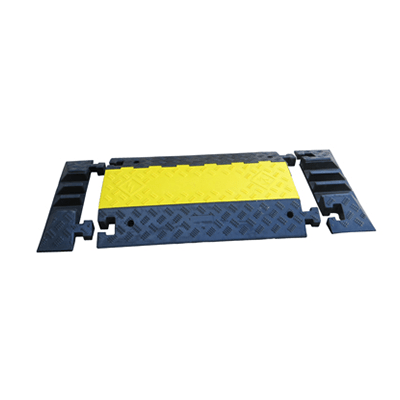
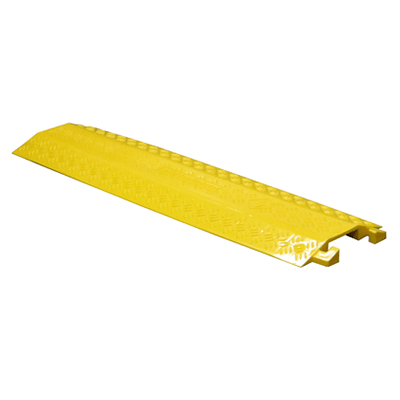
Cable covers protect electrical leads and cables running across floors, walkways and trafficked areas while reducing the risk of trips. The range includes rubber and polyurethane covers in single and multi-channel options, keeping cables contained and clearly marked in busy work areas. They suit both temporary and ongoing installations across industrial, maintenance and site applications.
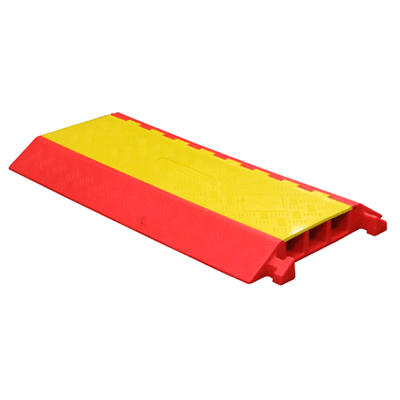
Our cable cover range provides a practical way to manage cables and leads that run across floors, walkways and access routes on industrial sites, in workshops and throughout maintenance areas. Each cover holds the cable inside a protective channel, shielding it from wear and impact while forming a low, gradual profile that people and equipment can pass over. The range includes rubber and polyurethane covers in single and multi-channel configurations, along with dropover covers for lighter applications where a single lead needs quick protection. Multi-channel covers suit locations where several cables follow the same route, keeping them separated and organised rather than stacked together. High visibility colouring helps the cover stand out against the floor, and end caps create a tidy, tapered transition at each end of the run. When choosing a cable cover, businesses should consider the number and diameter of cables being protected, the type and volume of traffic passing over, whether the installation is temporary or ongoing, and the surface it will sit on. Cable covers offer a straightforward way to protect valuable leads while keeping walkways and access routes safer and better organised.
Cable covers protect electrical leads and cables that run across floors, walkways and trafficked areas. They shield the cable from wear and impact damage while reducing the risk of trips in the surrounding work area.
Rubber cable covers are a widely used option for general lead and cable protection, while polyurethane covers are typically selected for heavier-duty applications. The right choice depends on the traffic passing over the cover and the conditions on site.
A dropover cable cover sits over the top of a single cable rather than having the lead threaded through a channel. This makes it quick to position and relocate, which suits shorter runs and temporary installations.
This depends on the specific cover. Some products are intended for pedestrian and light traffic only, while heavier-duty covers are built for more demanding applications. Always check the specifications of the individual product against the type of traffic expected.
Multi-channel covers carry several cables along the same route while keeping each one in its own separate channel. This keeps cable runs organised and avoids stacking multiple leads under a single cover.
Consider the number and diameter of cables to be protected, the type and volume of traffic passing over, whether the installation is temporary or ongoing, the surface underneath and the length of the run. Confirm that the product specifications suit the intended application and site conditions.
Plan lighting around the task, not the building. Combine area lighting to establish the zone, directional units for the task face and headlamps for hands-on work. Battery units remove leads, which are both a trip hazard and an energy source.
Design the standard to survive pressure. Spill kits and absorbents at the point of use, anti-slip matting on pedestrian routes, marked laydown areas so tooling stays clear of walkways, and an end-of-shift reset built into the job.
No. Cable covers provide mechanical protection only. They shield a lead from crushing and abrasion but are not an insulating barrier. Damaged leads need repair or replacement, not covering.
Yes, cable covers are widely used outdoors on sites and in laydown areas. A cover is not a seal, so water can still reach the cable, and the lead itself must be suited to wet outdoor conditions.
Our specialised team is here to assist with custom solutions and multi-site safety rollout.