Product Categories

Lockout Hasps for Group Isolation

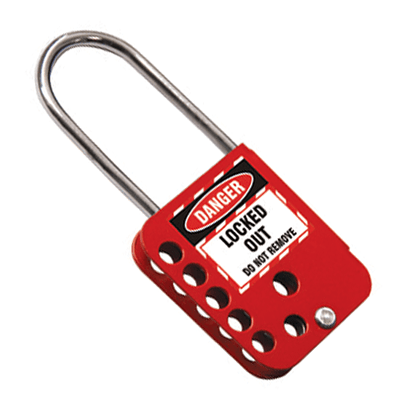
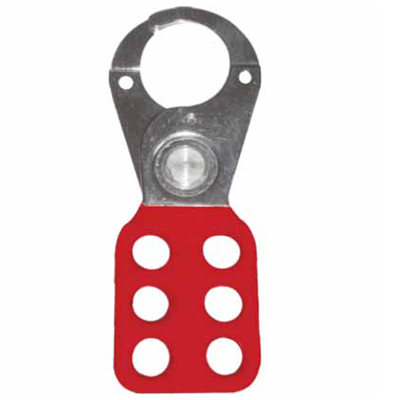
A lockout hasp lets several workers apply their own padlocks to a single isolation point, so the point stays locked until the last lock is removed. The range covers a stainless steel tamper proof hasp with seven padlock holes, and a vinyl coated hasp available in more than one jaw size. Both suit group isolation during maintenance and shutdown work.
MAX-LKH0

Vinyl Coated Lockout Hasp

Price range: $11.88 through $29.16

Stainless Steel and Vinyl Coated Hasps for Multi-Lock Isolation

A lockout hasp solves the problem of one isolation point and many workers. The jaws close through the isolation point, and each worker fits a personal padlock through one of the holes. The hasp cannot open while any lock remains, so energy stays isolated until every worker has finished and removed their own lock. No single person can restore energy on behalf of the crew. The stainless steel tamper proof hasp takes seven padlocks and suits larger crews, corrosive conditions and isolations that need to resist interference. The vinyl coated hasp is the general duty option and comes in more than one jaw size. Its coating protects the jaw and the surrounding equipment from marking. Jaw opening is the specification that decides fit, so measure the isolation point before ordering. Handles, levers and isolators vary widely even within one plant. When selecting a lockout hasp, work out the maximum number of workers who will lock onto a single point, measure the jaw opening needed to close over the isolation point, and consider the conditions on site. If crew numbers exceed the hole count, hasps can be linked together to carry more locks, where the site procedure allows it.

Stainless steel hasp with seven padlock holes and a tamper proof closed body

Lockout Hasps FAQs

A lockout hasp lets several workers lock a single isolation point at the same time. Each worker fits their own padlock through a hole in the jaw, and the hasp cannot be opened until every lock is removed.

This depends on the hasp. The stainless steel tamper proof hasp takes up to seven padlocks. Vinyl coated hasps vary by size, so check the hole count against the maximum crew locking onto that isolation point.

Both hold multiple padlocks on one isolation point. The stainless steel hasp is tamper proof, takes seven locks and resists corrosion. The vinyl coated hasp suits routine duty and comes in more than one jaw size.

A tamper proof hasp is built to resist being defeated or slipped off while locks are fitted. This matters on isolations left in place across shifts, or anywhere unauthorised interference is a credible risk.

Jaw opening decides whether the hasp will close over the isolation point at all. Measure the handle, lever or isolator first, because a hasp that does not close on the point is unusable at that location.

Hasps can be linked to carry more locks than one hasp holds, where the site procedure allows it. This suits large crews working on a single isolation. Confirm the arrangement is permitted before relying on it.

Not necessarily. A single worker can often apply a padlock directly if the isolation point accepts one. A hasp is needed when the point will not take a padlock directly, or when more than one lock must fit.

The vinyl coating protects the jaw and the surrounding equipment from marking and scuffing, and improves grip when handling the hasp. It is the general duty choice for routine isolation work across most sites.

Yes. Group isolation is standard on mining shutdowns, where several trades lock onto the same point. Stainless steel suits corrosive and high wear conditions, while vinyl coated suits workshop and plant duty.

A lockout hasp is one device within a documented lockout tagout procedure. The procedure sets who isolates, how energy is verified as isolated, and the order in which locks and tags are applied and removed.

Need Help to Raise the Safety Standards on Your Site?

Our specialised team is here to assist with custom solutions and multi-site safety rollout.