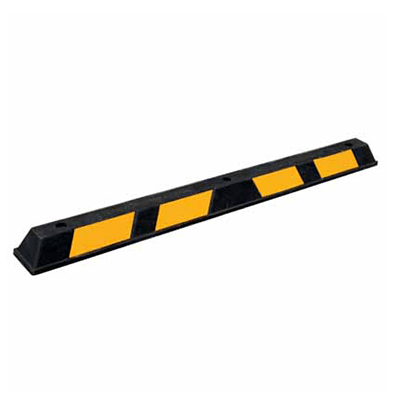
Wheel stops are fixed at the head of a parking bay to stop a vehicle rolling or driving past the intended position. The range covers rubber wheel stops for lighter duty and relocatable layouts, and concrete wheel stops for permanent installations. Both suit commercial car parks, service bays, workshops and industrial facilities.
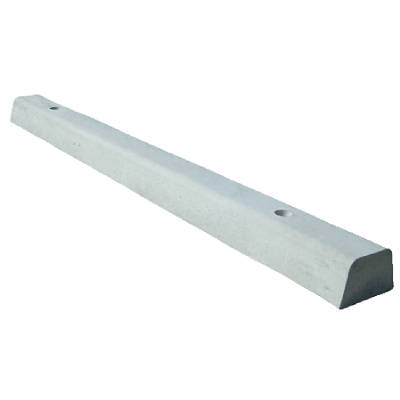
Our wheel stop range gives car parks and worksites a fixed reference point at the head of each bay. The wheel stop makes contact with the tyre before the vehicle reaches whatever sits behind it, which protects walls, walkways, fencing, bollards and service equipment, along with anyone using the adjacent path. It also keeps vehicles aligned within the marked bay rather than letting them creep over the line. Rubber wheel stops are lighter to handle, quick to install, and straightforward to unbolt and shift if a layout changes. Concrete wheel stops are considerably heavier and cost more, but they resist impact from larger vehicles and suit permanent bays where the layout is fixed. Both are available in more than one size, so check the length against the bay width before ordering. The choice usually comes down to whether the layout is settled or still changing. When specifying wheel stops, consider the vehicle types using the bays, the surface you are fixing to, the bay depth and the clearance needed beyond the stop for the vehicle's overhang. Confirm the dimensions and fixing method against the relevant Australian Standards and any local council conditions, particularly where the car park is open to the public.
A wheel stop is fixed at the head of a parking bay to stop a vehicle rolling or driving past the intended position. It protects walls, walkways, fencing and equipment behind the bay and keeps vehicles aligned.
Rubber wheel stops are lighter, cheaper and easy to relocate, which suits car parks that may be reconfigured. Concrete wheel stops are far heavier, cost more and suit permanent bays and larger vehicles.
Wheel stops are fixed to the surface using anchors suited to asphalt or concrete. Mark the position against the bay line first, check the clearance beyond the stop, then fix according to the method specified.
Rubber wheel stops are simple to unbolt and relocate if a car park layout changes. Concrete wheel stops can be lifted but need equipment because of their weight. Fixing holes left in the surface will need to be made good.
Set the wheel stop back from the head of the bay so the vehicle’s overhang clears the wall, kerb or path beyond it. Bay depth and the vehicle types using the car park both determine the setback
A wheel stop sits low and can be a trip hazard where people walk between bays. Contrasting colour, reflective detailing and keeping stops clear of designated pedestrian routes all reduce the risk.
Car parks open to the public are subject to Australian Standards for off-street parking and to local council conditions. Confirm dimensions, setback and placement requirements before installing or changing a layout.
A wheel stop is fixed in place at the head of a bay to limit how far a vehicle travels forward. A wheel chock is portable and placed against a tyre to stop a parked vehicle rolling away.
Suitability depends on the product. Rubber wheel stops suit light vehicle bays. Heavier vehicles need a concrete wheel stop or a purpose-rated product. Check the specifications against the vehicles using the bays.
Wheel stops define light vehicle parking positions in laydown areas, workshop yards and administration car parks. Fixed bay positions keep parking predictable and protect infrastructure on the boundary of each bay.
Our specialised team is here to assist with custom solutions and multi-site safety rollout.