5 Lighting Mistakes That Increase Worksite Risk
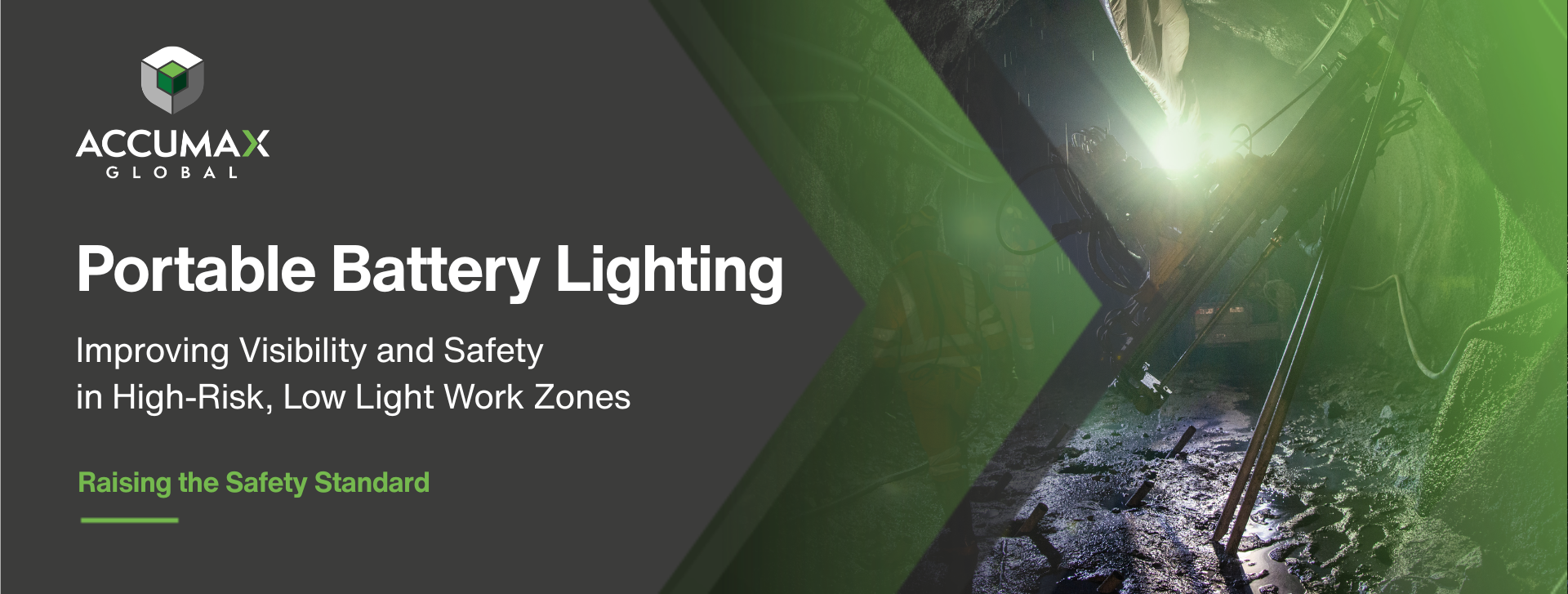
Lighting is often treated as a temporary afterthought on worksites. Yet visibility plays a critical role in worker awareness, hazard identification and safe equipment interaction.
Low-light environments significantly increase operational risk during shutdowns, night works, emergency repairs and remote operations. In these conditions, poor lighting can contribute to missed hazards, plant interaction incidents and reduced task precision. Understanding the common lighting mistakes that increase risk can help teams implement safer, more effective temporary lighting solutions.
Why Portable Battery Lighting?
Portable battery-powered lighting systems address many of the challenges associated with traditional temporary lighting. Accumax’s portable battery lighting systems provide:
- Rapid deployment without generators
- High-output LED illumination
- Long battery runtime
- Lightweight mobility for changing and dynamic work zones
These features make portable lighting particularly valuable in shutdown environments, remote worksites and emergency repair situations.
Watch: Portable Battery Lighting in Action
The video below demonstrates how portable battery lighting can be deployed quickly to improve visibility and safety in temporary work zones. This demonstration shows how teams can quickly position lighting, illuminate work areas and maintain visibility without generators or complex infrastructure.
Mistakes That Increase Risk on Your Site
Mistake 1: Relying on Existing Infrastructure
Many worksites assume that permanent lighting infrastructure will be sufficient for temporary works such as shutdown maintenance or emergency repairs. In reality, work zones often extend beyond fixed lighting coverage, creating blind spots where hazards are harder to identify.
Temporary lighting should be deployed wherever work is occurring, not just where infrastructure exists. Portable battery lighting allows teams to illuminate specific work areas quickly and effectively.
Mistake 2: Using Lighting That Takes Too Long to Deploy
When lighting systems require generators, cables and complex setup, teams may delay deployment or skip it altogether. In fast-moving work environments, lighting must be quick to transport, quick to position and quick to activate.
Portable battery-powered lighting removes the need for generators and allows teams to deploy illumination within minutes, improving safety without delaying work.
Mistake 3: Insufficient Illumination for the Task
Not all lighting systems provide adequate brightness for industrial work environments. Low-lumen lighting may create the illusion of visibility while still leaving shadows, glare or poorly illuminated areas that increase risk.
Lighting solutions should provide sufficient output to clearly illuminate work zones, equipment and surrounding hazards.
Mistake 4: Poor Lighting Positioning
Lighting that is positioned incorrectly can create shadows, glare or uneven illumination.
Common positioning mistakes include:
- Lighting placed too far from the work zone
- Light directed into workers’ eyes
- Shadows created around equipment or walkways
Adjustable portable lighting allows teams to direct illumination exactly where it is required.
Mistake 5: Failing to Adapt Lighting as Work Zones Change
Work environments are rarely static. During shutdowns, maintenance activities or construction works, teams frequently move between different work areas. If lighting is not repositioned accordingly, previously safe areas may become poorly lit.
Portable lighting systems allow teams to easily relocate illumination as work zones shift throughout the day or night.
Raising the Safety Standard in Worksite Lighting
Improving worksite lighting is one of the most practical ways to reduce operational risk in low-light environments. By addressing common lighting mistakes and deploying reliable portable lighting systems, organisations can significantly improve visibility, situational awareness and overall safety performance.
Better visibility leads to better decisions, safer interactions with equipment and more controlled worksites.